
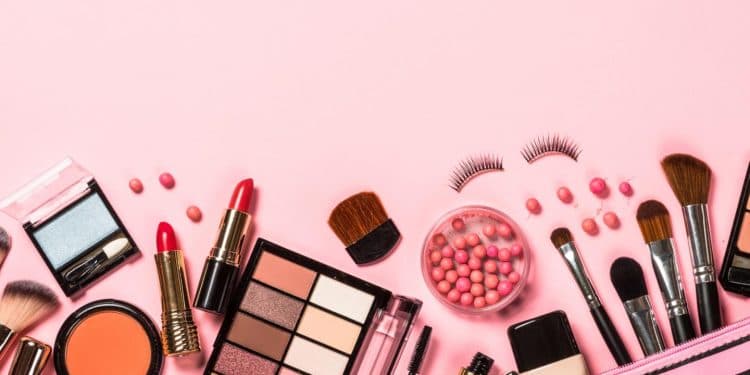
During the Great Recession, while people were losing jobs, tightening budgets, and canceling weekend plans, one small thing kept flying off shelves: lipstick.
Not groceries, not rent, not fuel, but lipstick.
In a time when people were cutting back on big expenses and even many small ones, younger women (aged 18–40) in the U.S. were spending more on makeup, especially lipstick, based on data from the U.S. Bureau of Labor Statistics’ Consumer Expenditure Survey (CEX).
Economists scratched their heads. Shouldn’t consumption go down when incomes shrink? Had Keynes missed a line in his General Theory about blush and eyeliner?
That’s where the “lipstick effect” comes in, a term coined to describe the curious trend of increased beauty spending during economic downturns. And no, this isn’t a tale of vanity. It’s a smart story about substitution, psychology, and the very human need for small joys when the world feels bleak.
Wait, What Is the Lipstick Effect?
The idea is simple: when people can’t afford big luxuries (like vacations, designer clothes, or fine jewelry), they still want to feel good, look good, or regain control. So, they go for small luxuries, like a new lipstick, a fancy coffee, or a nice fragrance.
Some psychologists once argued it’s about attracting a mate, that women subconsciously boost their appearance to increase their chances of “survival” (cue the caveman soundtrack). Others said it was about impressing employers, looking polished to stay competitive.
But a new study dug deeper. And what they found wasn’t just fascinating, it challenged all those earlier claims
A Data Dive into the Makeup Bag
Researchers used data from the U.S. Bureau of Labor Statistics’ Consumer Expenditures Survey (CEX). This data tracks detailed household spending across different categories, from rent and groceries to cosmetics and jewelry.
They zoomed in on the years surrounding the Great Recession and focused on women aged 18 to 40, the group most frequently associated with beauty consumption.
Here’s what they found:
- Cosmetics spending increased during the Great Recession.
- The increase happened regardless of marital or employment status.
- Married and unmarried women both spent more.
- Employed women didn’t significantly boost their spending.
This punched holes in the mate-attraction and job-security theories. Women weren’t necessarily buying lipstick to date or impress men.
So… why?
The Frugal Treat Theory
Let’s say you’re facing job uncertainty. You’re cutting back on dinners out. That dress you liked? You’ll wait. But a $12 lipstick that makes you feel like yourself again?
You might just go for it.
The researchers found that women were spending less on other categories, especially clothes, jewelry, eating out, and alcohol, but more on cosmetics. They were substituting. Choosing lower-cost luxuries that still gave them a sense of normalcy, indulgence, and even empowerment.
Even when cosmetics prices slightly increased relative to clothes during the recession, women still shifted their money from fashion to makeup.
In other words, it wasn’t about survival. It was about resilience, the subtle but powerful way consumers rewire their habits to cope.
Beyond the U.S.: Echoes in Ethiopia
This makes sense even in places like Ethiopia, where the beauty and personal-care market is not niche; it’s now a $5.32 billion industry in 2025, growing ~3% yearly. Cosmetics alone lead the charge, stacking up to $576 million in revenue with a 3.2% CAGR. Although economic instability constrains spending, demand for affordable indulgences, like colorful lipsticks or locally crafted lip balms, remains palpable.
Local entrepreneurs are responding smartly: mini-sizes, natural-ingredient lines, and social-media-driven launches are making beauty accessible even in tight times. Buying lipstick in Addis may feel different than in New York, but the urge is the same: small moments of regained confidence, bought one swipe at a time.
Why It Matters (More Than You Think)
It reminds us that consumer habits are emotional, not always rational, and often driven by how we feel more than what we earn.
It also shows that small spending can convey big meaning. A smell of resilience in a perfume bottle. A pop of confidence in a lip tint.
For businesses, it’s a case study in understanding consumer psychology, especially during downturns. For economists, it’s a lesson in looking beyond GDP and unemployment. And for all of us?
Maybe that red swipe on your lips, or whatever your modest luxury is, does more than look good. It reminds you that you’re still here. You still matter.