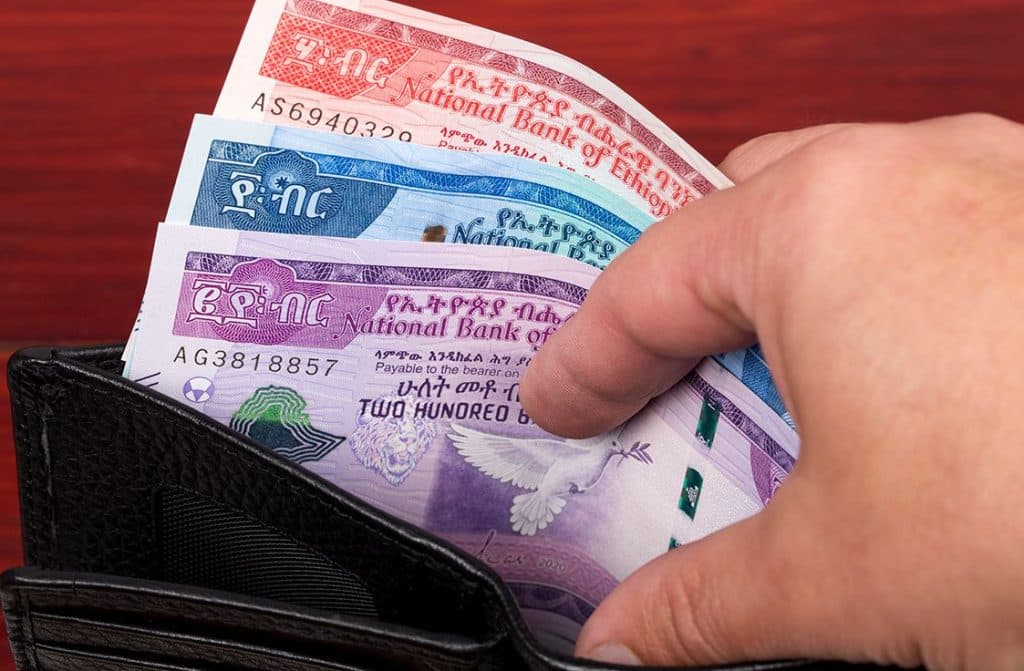
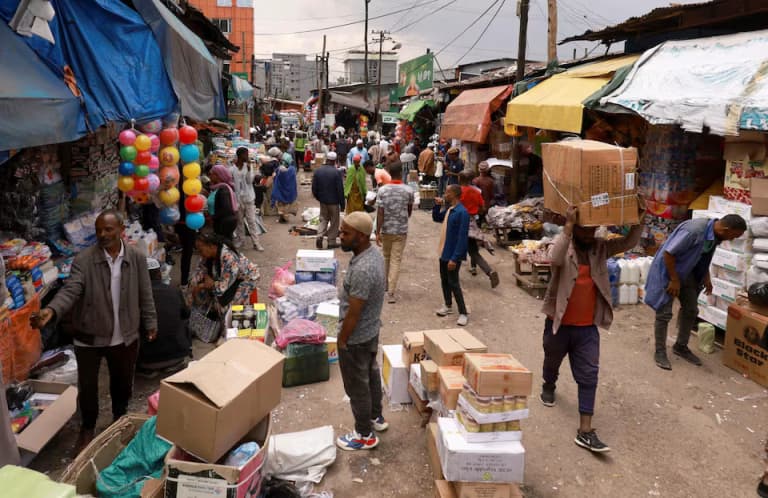
For years, rising prices have shaped everyday life in Ethiopia. Each visit to the market meant buying less with the same money. Households adjusted, cut back, and adapted as inflation ate into incomes. Now, the numbers suggest a turning point. In December EFY 2018, Ethiopia’s year-on-year inflation fell to 9.7 percent, down from 17.0 percent
The United States has announced its withdrawal from 66 international organizations following a review conducted under Executive Order 14199, the State Department said on Tuesday. In a press statement, Secretary of State Marco Rubio said the Trump administration determined that the organizations were “wasteful, ineffective, or harmful,” citing concerns that they are redundant, mismanaged, or
Ethiopia has reached an agreement in principle with an Ad Hoc Committee of bondholders on the restructuring of its USD 1 billion, 6.625 percent Eurobond due in 2024, the Ministry of Finance announced on Friday. The agreement follows restricted negotiations held between December 23, 2025, and January 1, 2026, with the Ad Hoc Committee representing
The National Bank of Ethiopia (NBE) has announced a major reform of its reserve requirement regime, issuing Directive No. SBB/97/2025, as part of broader efforts to modernize monetary policy and deepen the interbank money market. The new directive, which replaces the 2022 framework, applies to all commercial banks operating in Ethiopia and will take effect
The National Bank of Ethiopia (NBE) has reaffirmed its commitment to price stability and sustainable economic growth following the Monetary Policy Committee’s (MPC) fifth meeting on December 22, 2025. In a press release issued today, the NBE outlined recent economic developments, including easing inflation trends and robust GDP growth, while endorsing measures to tighten monetary
Ethiopia’s birr has ranked as the third-weakest currency globally in 2025, trailing only the Argentine peso and the Turkish lira, underscoring the depth of the country’s ongoing macroeconomic and debt-related challenges. The birr has depreciated by more than 15% against the U.S. dollar this year, weighed down by persistent dollar shortages, elevated inflationary pressures, and
The International Monetary Fund (IMF) has reached a staff-level agreement with Ethiopia on the fourth review of its $3.4 billion lending programme, clearing the way for a new disbursement of $261 million once approved by the Fund’s Executive Board. The latest tranche will raise total IMF support to Ethiopia under the Extended Credit Facility (ECF)
Ethiopia has launched the draft National Digital Payment Strategy 2026–30 (NDPS 2.0), signaling a major milestone in the country’s digital finance transformation. The announcement was made today during the Ethiopian Digital Payment Conference 2.0, in the presence of top officials including Deputy Prime Minister Temesgen Tiruneh; National Bank of Ethiopia Governor Eyob Tekalign; AfCFTA Secretary
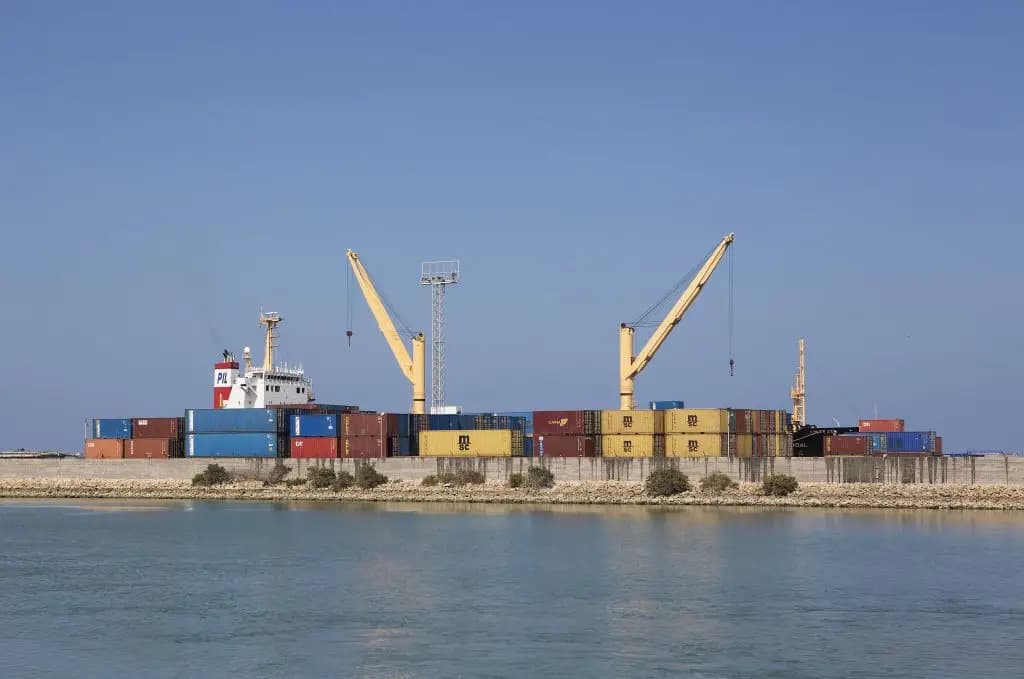
As Ethiopia races to industrialise and plug itself into East Africa’s emerging trade corridors, one structural constraint shapes its economic reality more than any other: maritime access. The country once relied on two Red Sea ports, Assab and Massawa, as its commercial lifeline. By the early 1990s, Assab alone handled more than 80% of Ethiopia’s
Ethiopia aims to complete its debt-restructuring process under the Group of 20 Common Framework by mid-2026, Finance Minister Ahmed Shide announced on Friday during a briefing in Addis Ababa. According to the minister, the government is making “significant progress” in securing agreements with official creditors and continues to engage private lenders as part of a
The World Bank has cautioned that developing countries remain vulnerable to rising debt burdens, despite signs of easing global financial conditions. In its latest International Debt Report, the institution revealed that interest payments for developing nations reached a record $415.4 billion in 2024. Between 2022 and 2024, the gap between debt servicing costs and new
Ethiopian authorities have arrested 24 people connected to sports-betting companies that are accused of hiding more than 100 billion birr in government revenue, according to the National Intelligence and Security Service (NISS). NISS said it had been watching betting companies and payment providers, including fintech and aggregator firms, over suspected illegal activities. Investigators found that


 Business