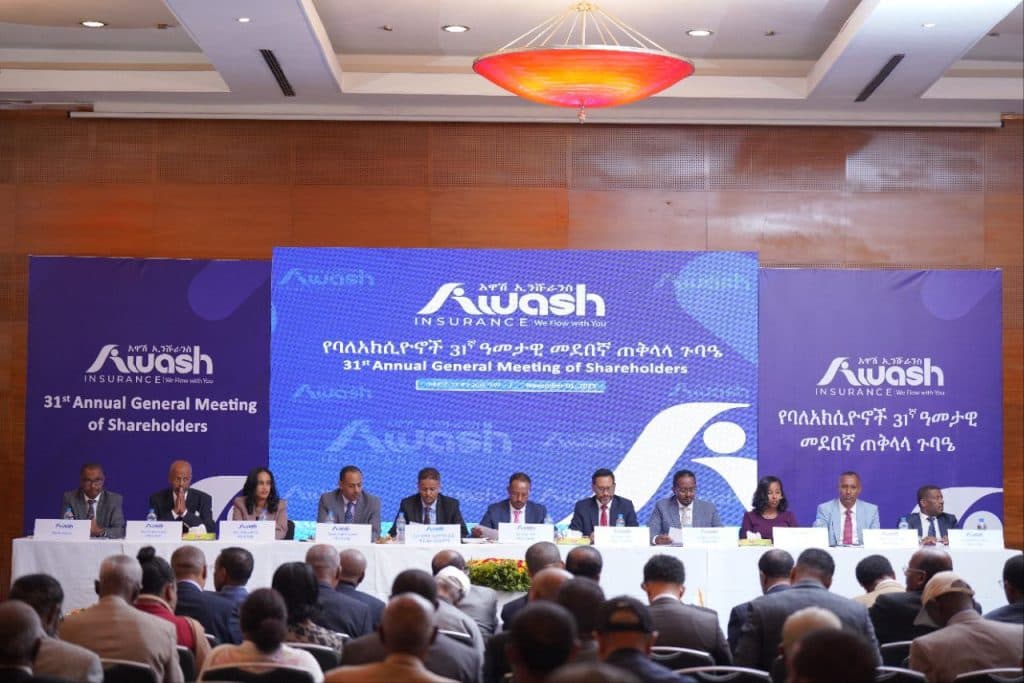
Awash Insurance S.A. has made history by becoming the first private insurer in Ethiopia to record a pre-tax profit surpassing 1 billion birr—a milestone marking its 31st consecutive year of profitability. At its 31st Annual General Meeting held on October 22, 2025, the company announced a 27% increase in gross profit compared to the previous
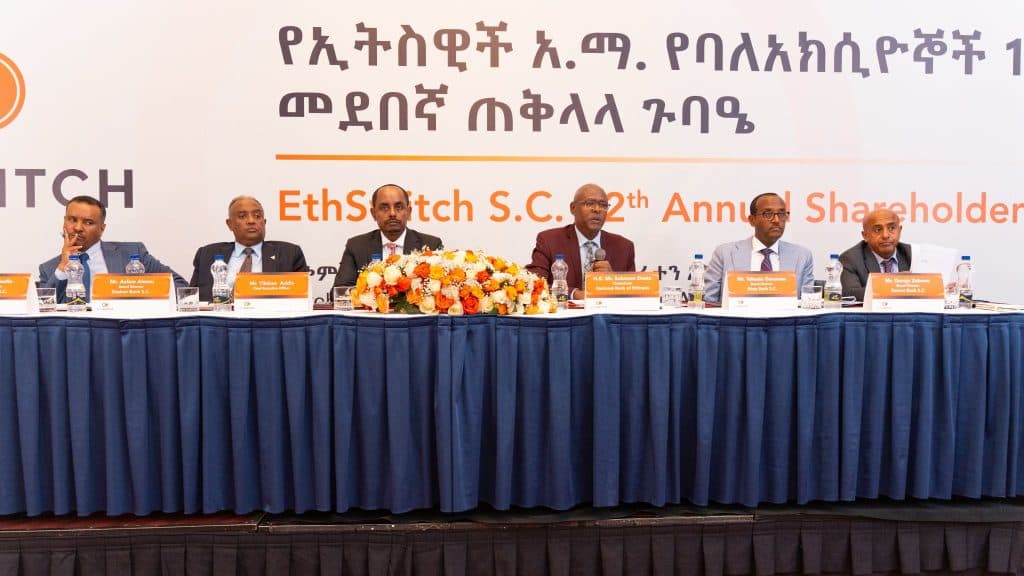
Ethiopia’s national payment switch operator, EthSwitch, reported strong growth in transaction volumes and financial performance during its 12th Annual Shareholders Meeting held on Tuesday at the Sheraton Addis. The company said it processed 287.4 million interoperable transactions valued at 741.1 billion birr ($12.8 billion) over the past fiscal year, reflecting significant expansion in digital payment
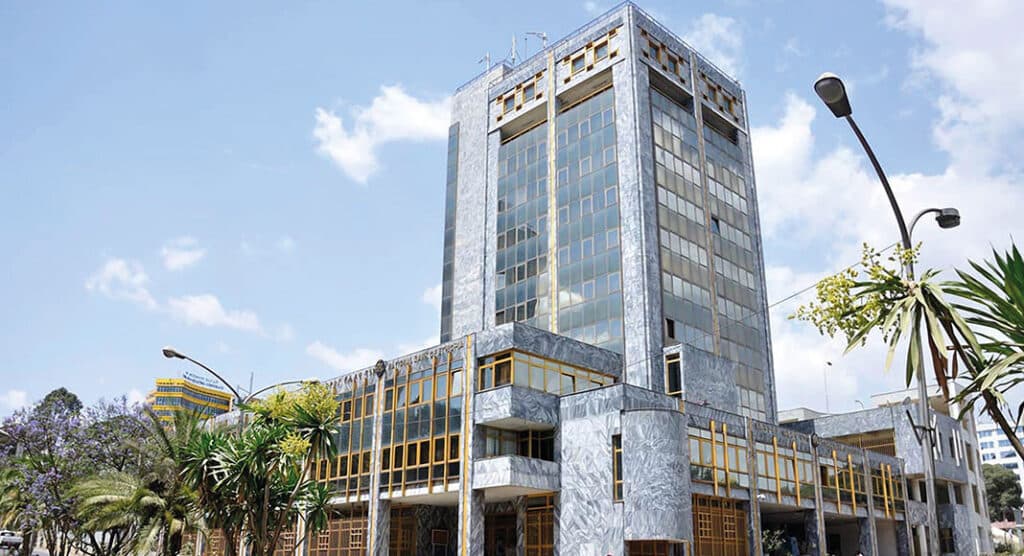
Ethiopia’s central bank said on Thursday it had ordered commercial banks to report businesses and traders using personal or third-party bank accounts instead of their registered business accounts, citing concerns over tax evasion and illicit financial activity. The National Bank of Ethiopia (NBE) said its assessment revealed that “a significant number of bank customers, primarily
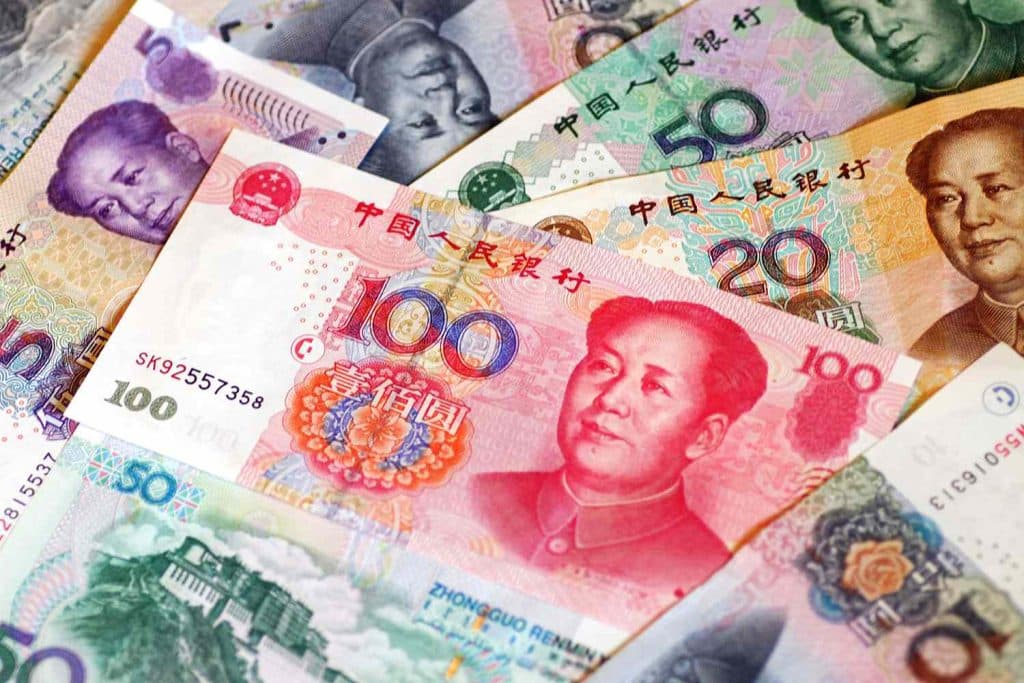
Ethiopia just slid into China’s DMs, economically speaking. The country has started talks to convert part of the $5.38 billion it owes Beijing from dollar loans to yuan-denominated debt, taking a page out of Kenya’s playbook (and probably borrowing its calculator too). National Bank Governor Eyob Tekalign told Bloomberg that a currency swap “makes sense”
The National Bank of Ethiopia (NBE) has announced the results of its 10th foreign exchange auction, allocating U.S. dollars to 31 commercial banks at a weighted average rate of Birr 148.1007 per USD, signaling continued adjustment toward a market-driven exchange rate. The latest allocation follows the central bank’s $150 million injection during Auction No. 9
Ethiopia’s central bank said on Monday it will hold a $150 million foreign exchange auction on October 14, its first such operation in more than two months, as part of efforts to boost liquidity and stabilise the currency market. The National Bank of Ethiopia (NBE) said in a statement that improving foreign exchange inflows this
Ethiopian banks continue to strengthen their continental presence, with six institutions appearing in the 2025 Top 100 African Banks ranking, up from five in 2024 and just two in 2022. This rapid rise highlights the country’s accelerated banking sector deregulation and growing competition, which are clearly translating into measurable gains in capital strength. One of
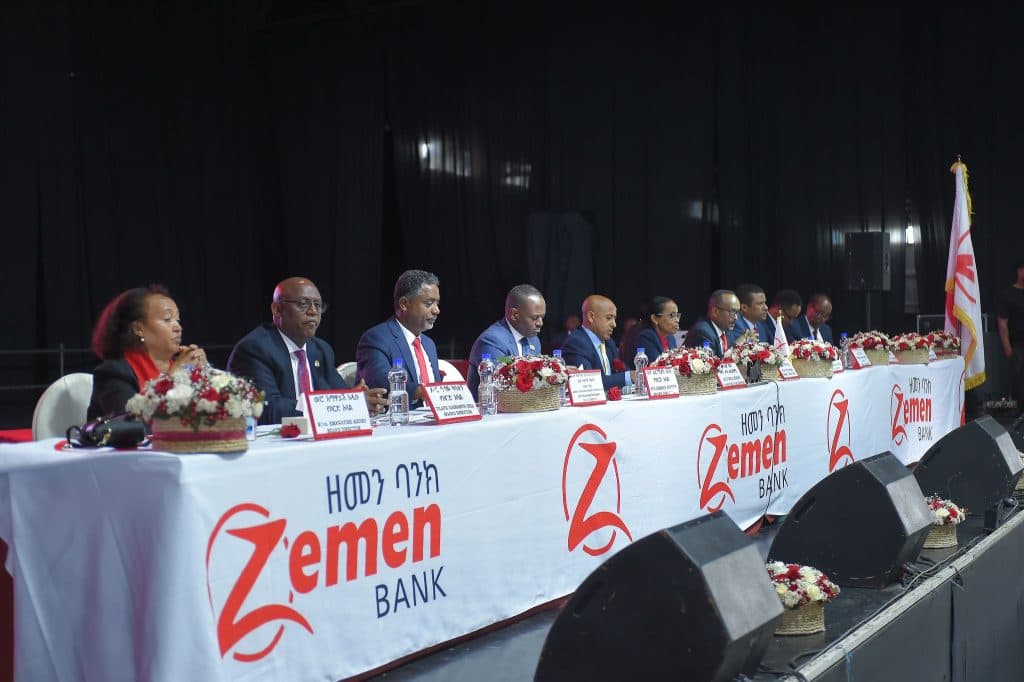
Ethiopia’s Zemen Bank S.C. reported a sharp rise in annual earnings on Saturday, posting one of the country’s highest banking returns as profit nearly tripled amid strong revenue growth. The lender said earnings per share (EPS) reached 68.3% in the 2024/25 fiscal year, underscoring its position among the sector’s top performers. Revenue climbed to 14.4
Ethiopia has officially flipped the switch on continental free trade. In a landmark move, the country has kicked off exports under the African Continental Free Trade Area (AfCFTA), sending its first shipments of meat, fruits, coffee, oilseeds, and yes, khat to Kenya, Somalia, and South Africa. The launch wasn’t just ceremonial. Ethiopian Airlines Cargo was
Imagine this.Ethiopia’s economy has been one of Africa’s fastest-growing for over a decade, skylines rising, industrial parks buzzing, public projects transforming entire regions. Yet, behind the growth story lies a quieter, more puzzling one: the government’s tax revenue has been shrinking relative to the size of the economy. In 2014, for every 100 birr produced
KEFI Gold and Copper Plc said its Tulu Kapi Gold Project in western Ethiopia remains on track to enter full development in October 2025, as a US$340 million financing package nears final commitment. The London-listed company said board approvals for a US$240 million debt facility from two co-lenders have been secured, with formal signing expected
Ethiopia, the birthplace of Arabica coffee, is raising the stakes in its most prized export industry. A sweeping new regulation, Directive 1106/2025 from the Ethiopian Coffee and Tea Authority (ECTA) has sent shockwaves through the sector by dramatically increasing the minimum capital required for exporters and tightening quality controls. The move is billed as a


 Business