Ethiopian banks continue to strengthen their continental presence, with six institutions appearing in the 2025 Top 100 African Banks ranking, up from five in 2024 and just two in 2022. This rapid rise highlights the country’s accelerated banking sector deregulation and growing competition, which are clearly translating into measurable gains in capital strength. One of
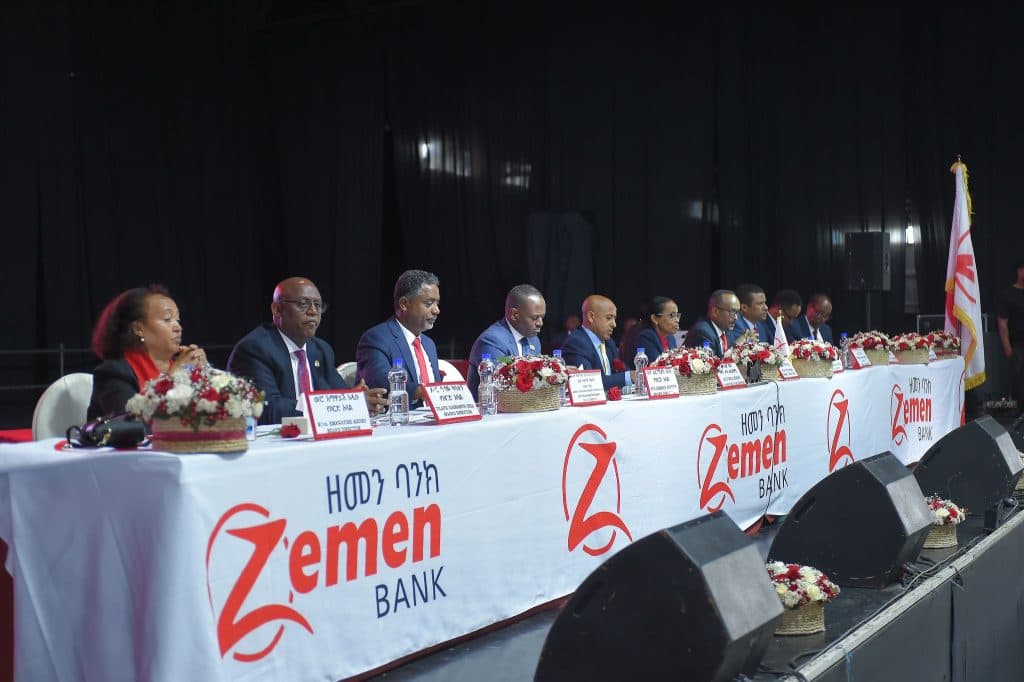
Ethiopia’s Zemen Bank S.C. reported a sharp rise in annual earnings on Saturday, posting one of the country’s highest banking returns as profit nearly tripled amid strong revenue growth. The lender said earnings per share (EPS) reached 68.3% in the 2024/25 fiscal year, underscoring its position among the sector’s top performers. Revenue climbed to 14.4
Imagine this.Ethiopia’s economy has been one of Africa’s fastest-growing for over a decade, skylines rising, industrial parks buzzing, public projects transforming entire regions. Yet, behind the growth story lies a quieter, more puzzling one: the government’s tax revenue has been shrinking relative to the size of the economy. In 2014, for every 100 birr produced
Wegagen Bank S.C. reported a 73% year-on-year surge in gross profit to 3.85 billion birr ($66.5 million), marking one of its strongest financial performances in years, the bank said on Tuesday. At its annual general meeting held at the Hilton Hotel, Board Chairman Abdishu Hussien said the bank’s earnings were driven by robust income growth,
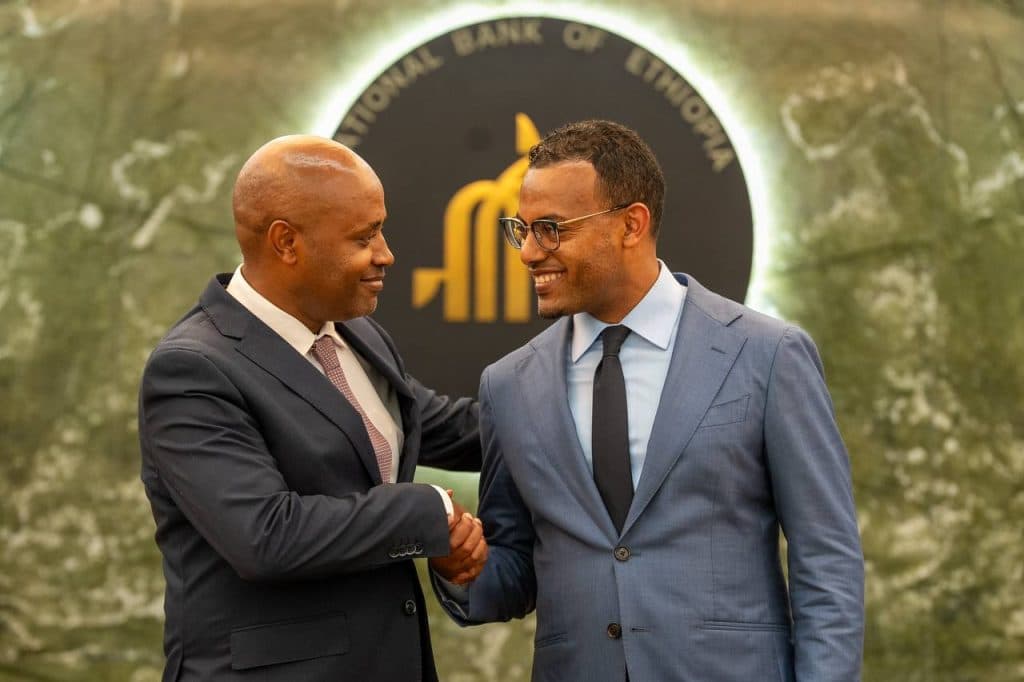
On a muted September afternoon in Addis Ababa, the announcement arrived without ceremony but carried the unmistakable weight of a turning point: Dr. Eyob Tekalign would assume the governorship of the National Bank of Ethiopia. There were no dismissals wrapped in drama, no emergency pressers or currency shocks—just a quiet passing of the baton from
Ethiopia’s Ministry of Finance has released its Treasury bills auction schedule for the final quarter of 2025, outlining plans to issue 243.05 billion birr across four maturities between October and December. According to the calendar, auctions will be held every two weeks from Oct. 1 to Dec. 24, offering 28-day, 91-day, 182-day and 364-day bills.
KEFI Gold and Copper Plc said its Tulu Kapi Gold Project in western Ethiopia remains on track to enter full development in October 2025, as a US$340 million financing package nears final commitment. The London-listed company said board approvals for a US$240 million debt facility from two co-lenders have been secured, with formal signing expected
Ethiopia has officially begun restructuring talks with investors holding its $1 billion international bond, according to a source familiar with the process who spoke to Reuters on Monday. The discussions are being held in Paris, the source said, confirming an earlier Bloomberg report. An official from Ethiopia’s Ministry of Finance also confirmed that a government
Ethiopia’s central bank kept its benchmark interest rate unchanged and modestly raised its credit growth target after a policy review that pointed to easing inflation but lingering risks. The Monetary Policy Committee (MPC) of the National Bank of Ethiopia (NBE), meeting on Sept. 25, said it would maintain the National Bank Rate at 15% and
The Ethiopian Commodity Exchange (ECX) has fully implemented an online trading system, allowing market participants to trade agricultural commodities remotely for the first time, officials said. The digital platform, introduced in April, enables traders to buy and sell from any location without physical contact. ECX says the system is designed to improve efficiency, transparency, and
Ethiopia’s interbank money market has surpassed 1 trillion birr (ETB) in total transaction volume less than a year after its launch, marking a major step in efforts to modernize the country’s tightly controlled financial system. The platform, launched in October 2024 and operated by the Ethiopian Securities Exchange (ESX), allows commercial banks to borrow and
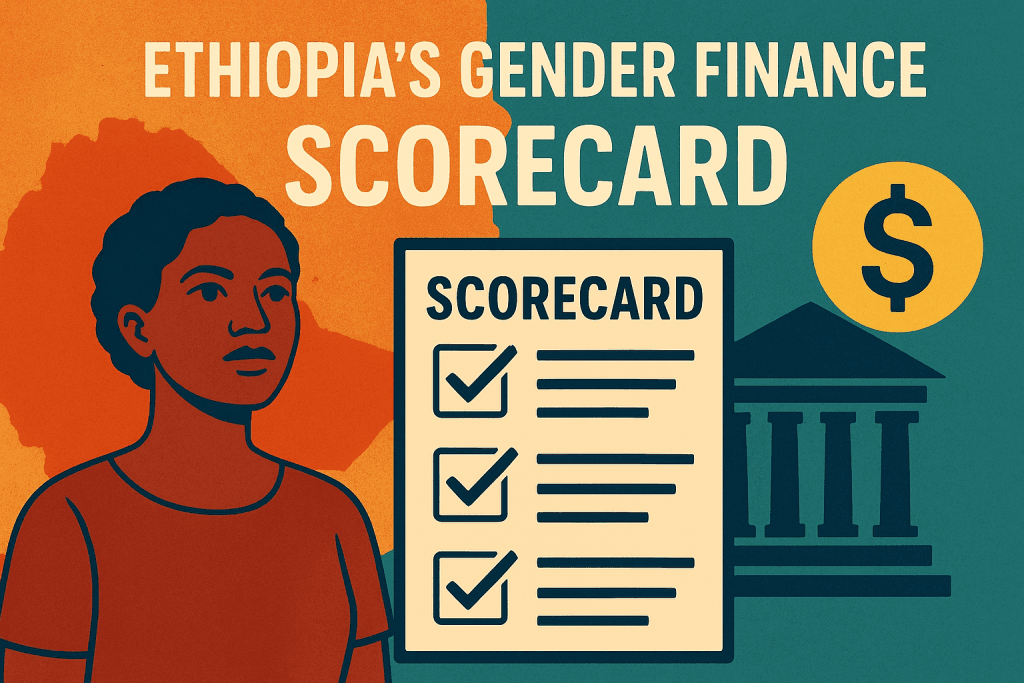
Women in Ethiopia are still struggling to access finance, facing higher rejection rates and smaller loans than men. They are also underrepresented in the fast-growing digital payments sector, where they make up just 22% of users. The National Bank of Ethiopia (NBE), with backing from the World Bank’s Africa Gender Innovation Lab, has rolled out


 Banking & Finance